

Solo Female Travel in India 2026: The Complete Practical Guide to Staying Safe, Planning Smart, and Enjoying the Journey
By JC Grace Travel and Tours • Travel Guides • Solo Travel • India
- Why India Is One of the Most Rewarding Solo Trips You Can Take
- Who This Guide Is For
- Is India Safe for Solo Female Travellers?
- The Right Mindset Before You Go
- How to Plan Your Route Without Burning Out
- Best Types of Places to Start With
- What to Pack for India
- What to Wear as a Solo Female Traveller
- Getting Around India Safely and Smoothly
- Where to Stay and How to Choose Better Accommodation
- Food, Water, Hygiene, and Avoiding Travel Sickness
- Money, SIM Cards, Apps, and Daily Essentials
- Handling Attention, Boundaries, and Social Situations
- Mistakes to Avoid
- Suggested 7-Day, 10-Day, and 14-Day Itineraries
- Experience-Based Advice That Makes a Huge Difference
- Frequently Asked Questions
- Final Thoughts
Why India Is One of the Most Rewarding Solo Trips You Can Take
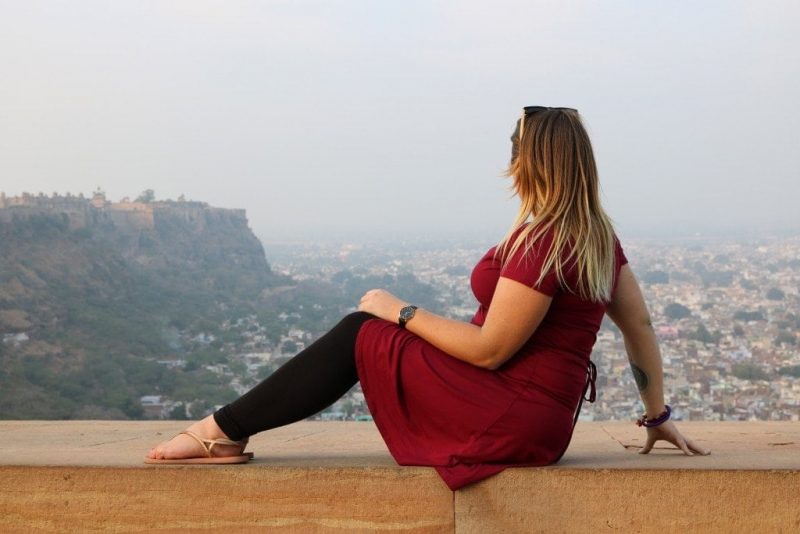
India is not the kind of destination that gives you a polished, predictable, easy version of travel. It gives you something deeper. It gives you contrast. One hour you can be drinking chai on a station platform while watching daily life unfold around you, and the next you can be standing inside a centuries-old fort, crossing a market full of colors and noise, or sitting in silence in a place that feels far older than your plans, your fears, and your assumptions.
That is exactly why so many travelers fall in love with India, and also why so many first-time visitors feel intimidated by it. India is not difficult because it is bad. India is difficult because it is alive. It asks you to pay attention. It asks you to adapt. It asks you to accept that things may not always go neatly, and that not every meaningful travel experience comes in a convenient format.
For solo female travellers, the conversation around India is often dominated by one topic: safety. That topic matters, and this guide takes it seriously. But reducing India to fear alone is also unfair and incomplete. India can be tiring, yes. It can be overwhelming, yes. It can also be generous, warm, fascinating, and deeply memorable. In many cases, the same destination that challenges you the most is also the one that leaves the strongest mark on you afterward.
This guide is designed to help you prepare properly, not panic unnecessarily. The goal is not to make India sound easy when it sometimes is not. The goal is to help you travel through it with better judgment, better expectations, better systems, and more confidence.
Who This Guide Is For
This article is for women who want a realistic, practical, detailed guide before traveling solo in India. Maybe you are planning your first independent trip. Maybe you have already traveled alone elsewhere in Southeast Asia or Europe, but India feels like a bigger leap. Maybe you are confident in theory but worried about the little day-to-day details that are harder to picture from a distance.
It is also for travelers who do not want vague advice. You do not need empty motivation. You need real planning help. You need to know how to build a route, what clothes will make your trip easier, when trains are a good idea, when they are not, how not to get sick, how to set boundaries, what mistakes people make, and how to enjoy the country without constantly feeling like you are in survival mode.
If that sounds like you, this guide is built for exactly that stage: before the trip, when the destination is exciting but still full of unanswered questions.
Is India Safe for Solo Female Travellers?
The honest answer is that India can be safe for solo female travellers, but it is not a destination where you should travel passively. You need awareness. You need boundaries. You need to think ahead more than you might in some other countries. That does not mean you should avoid India. It means you should approach it with a serious, practical mindset.
The safest way to think about India is not through extremes. It is neither true that India is automatically too dangerous for women nor true that all concerns are overblown. Both positions oversimplify reality. Like many large and complex countries, safety depends on where you go, how you move, what time it is, how tired or alert you are, how good your accommodation choices are, and how well you handle situations that feel off.
A smart solo female traveller in India usually does well by following a few basic principles: avoid isolated areas at night, do not overtrust strangers too quickly, use reliable transport options, keep someone updated about your plans, choose your accommodation carefully, and act early when something feels wrong instead of waiting for it to become worse.
One of the biggest mistakes travelers make is assuming safety is a yes-or-no category. It is more accurate to think in layers. A city can be broadly manageable but still have situations you want to avoid. A town can feel friendly but still require common sense. A hotel can look good online but still matter enormously in terms of location, staff quality, and how secure you feel when you return after dark.
The Right Mindset Before You Go
The most helpful mindset for solo travel in India is calm alertness. Not paranoia. Not overconfidence. Calm alertness. That means staying observant without assuming every person or every moment is a threat. India becomes much more manageable when you stop expecting it to behave like a tidier, quieter version of somewhere else and start meeting it on its own terms.
You will probably get attention, especially if you visibly look like a foreign traveler. Sometimes that attention is simple curiosity. Sometimes it is annoying. Sometimes it is tiring. Occasionally it can feel uncomfortable. The key is to stop measuring every interaction emotionally and instead manage them practically. You do not need to explain yourself to everybody. You do not need to be endlessly available for conversation. You do not need to smile through every awkward situation to prove you are polite.
A grounded solo traveler usually does better than either the overly nervous traveler or the overly romantic one. If you arrive expecting either a disaster or a spiritual movie montage every day, reality will frustrate you. If you arrive expecting complexity, then complexity feels normal rather than threatening.
Another powerful mindset shift is this: you do not have to see everything. Many first-timers build impossible schedules because India feels huge and exciting. Then they end up tired, overexposed, impatient, and less safe because exhaustion weakens decision-making. A better trip is usually a smaller trip that you actually have the energy to enjoy.
How to Plan Your Route Without Burning Out
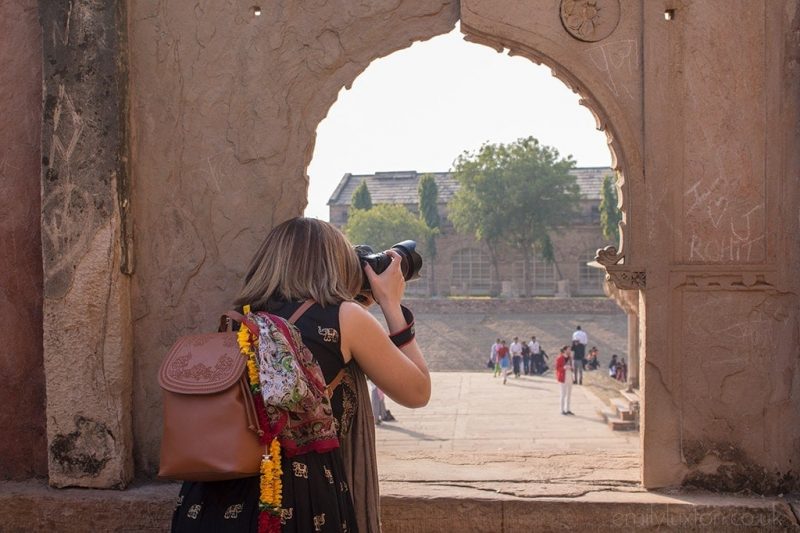
India punishes rushed itineraries more than many destinations do. Not because transport is impossible, but because every transfer can take more out of you than expected. A move that looks simple on paper can become physically and mentally tiring in real life. Stations are busy. Roads are noisy. Heat can be draining. Even good days involve a lot of sensory input.
This is why first-time solo travellers often do better with fewer destinations and longer stays. If a town looks like it needs two days, give it three. If you are deciding between adding one more city or building in one recovery day, take the recovery day. The value of extra breathing space becomes obvious only once you are on the ground.
A strong beginner route usually combines a few characteristics: destinations with decent tourist infrastructure, places where moving around is relatively straightforward, a rhythm that balances culture and recovery, and accommodation options that feel manageable rather than chaotic. You do not need to “prove” anything by starting with the most intense route possible.
A practical planning formula is this:
- Choose 2 to 4 main bases rather than 6 or 7 quick stops.
- Keep at least one low-pressure day every 4 or 5 days.
- Avoid arriving in a new place late at night whenever possible.
- Keep your first destination simpler than your most ambitious one.
- Leave room for weather, fatigue, or plan changes.
That sounds basic, but these decisions create the foundation for whether your trip feels empowering or exhausting.
Best Types of Places to Start With
For many solo female travelers, starting with smaller or mid-sized tourist-friendly destinations is easier than jumping straight into the biggest cities. Big cities can absolutely be worth visiting, but they often demand more from you early on. If India is your first solo trip there, it can help to start somewhere that allows you to get used to the rhythm of the country before layering on maximum intensity.
Good starter destinations are often places where transport is established, accommodation is easy to book, day-to-day movement is understandable, and there is enough of a traveler presence that you do not feel completely isolated in your experience. Heritage towns, culturally rich small cities, mountain towns with tourism infrastructure, and places where you can base yourself for a few nights usually work better than nonstop urban hopping.
What matters most is not the internet’s “top 10” list. What matters is matching the destination to your current confidence level. A place can be famous but still wrong for the moment you are in. Another place can be less hyped but perfect for building rhythm and confidence.
A simple first-trip strategy
A smart first trip often combines one major arrival point, one culturally rich but manageable base, and one slower place where you can recover and reflect. That gives you variety without overload. It also helps you avoid the common trap of trying to understand all of India at once.
What to Pack for India
Packing well for India is less about bringing more and more about bringing the right things. The best packing choices usually improve comfort, modesty, mobility, and hygiene all at once. This is one of those destinations where the wrong wardrobe can make you feel more visible, more uncomfortable, and more exhausted than necessary.
Essentials worth prioritizing
- Loose trousers, maxi skirts, or long breathable dresses
- Leggings or light layers for extra coverage
- A scarf or shawl for temples, sun, dust, or added modesty
- A secure cross-body bag
- A padlock for lockers and extra peace of mind
- Basic medicine: pain relief, stomach support, ORS, antihistamine, antiseptic wipes
- Hand sanitizer and tissues
- A reusable water bottle if that suits your setup
- Power bank and charging cable
- Slip-on sandals plus one solid walking shoe
You do not need to carry your whole medicine cabinet. You do need enough to get through a rough day without panicking. Likewise, you do not need a mountain-expedition packing list for a city-and-heritage route, but you do need functional clothes that work with heat, temples, trains, and long travel days.
Why your bag matters
Your day bag should make you feel organized, not vulnerable. That usually means something that closes securely, stays attached to your body, and does not force you to constantly rearrange loose items in public. In crowded stations or markets, the less you have to perform “bag chaos,” the better.
What to Wear as a Solo Female Traveller
Dressing more modestly in India is not about giving in to fear. It is about making your life easier. In many parts of the country, covering shoulders, chest, and legs more than you might at home can reduce unwanted attention, help you feel more comfortable, and make temple visits more straightforward.
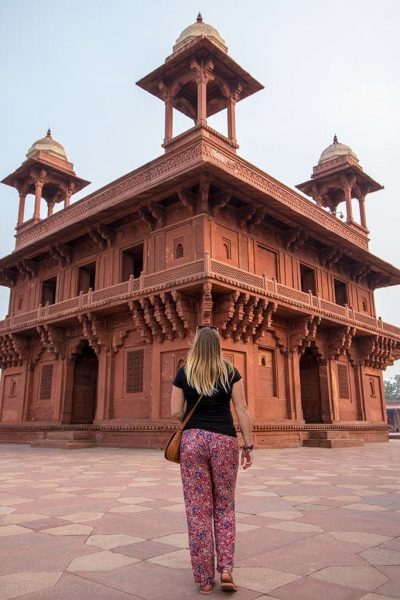
This does not mean you need to erase your style or dress in a way that does not feel like you. It means choosing clothes that support the trip you want to have. Loose trousers, long skirts, midi or maxi dresses, tunics, cotton tops, and layers that breathe well are usually a sweet spot. They help with sun, dust, modesty, and comfort all at once.
Clothes also influence how you feel in public. If you are constantly adjusting a hemline, pulling at a neckline, or feeling stared at more than usual, you use up emotional energy that would be better spent on enjoying the destination. Practical clothing is not boring. It is strategic.
Another subtle point is that dressing “travel-expensive” can sometimes affect the prices you are first quoted. Looking polished is not a crime, of course, but in certain situations—especially markets—looking very obviously high-spending may make bargaining less flexible. Your clothes do not need to be shabby. They just do not need to scream luxury travel either.
Getting Around India Safely and Smoothly
Transport in India is not impossible. In fact, one of the biggest surprises for many first-time visitors is that India can be more navigable than expected once you understand the system. The challenge is not that nothing works. The challenge is that movement can be tiring, crowded, and unpredictable if you do not build in enough margin.
Trains
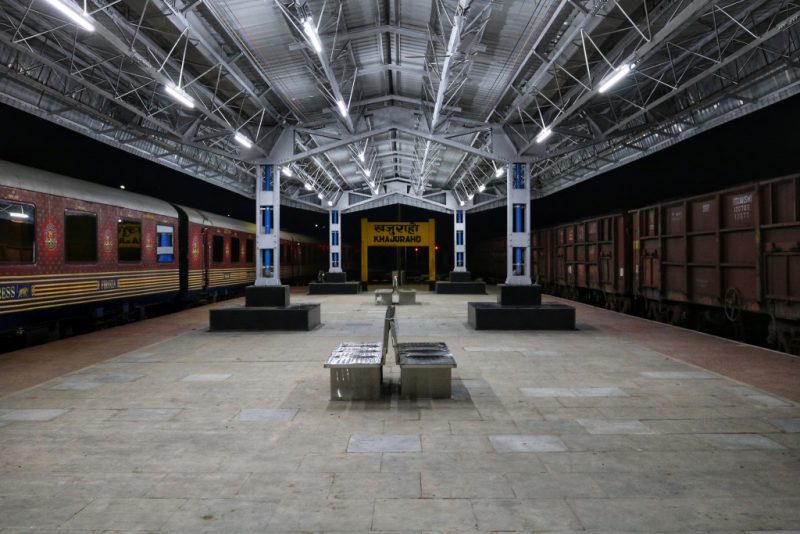
Trains are one of the most iconic ways to travel through India. They can also be one of the most rewarding. Day trains are especially good for first-timers because they allow you to stay oriented, see the landscape, and avoid the stress of arriving half-asleep at an unfamiliar station before sunrise. Overnight trains are doable, but they are not always the best starting point if you are new to the country and traveling solo.
If you take trains, book as early as you can for better options. Keep your valuables close. Know your platform in advance when possible. Arrive with enough time that you are not making rushed decisions in a crowd. A train journey in India is much easier when you are slightly early than when you are slightly late.
Domestic flights
Domestic flights can be a very smart choice when distances are long and your energy is limited. Some travelers feel guilty about not doing every leg “the authentic way.” Ignore that. The best transport option is the one that helps you enjoy the trip more safely and sustainably for your body and mind. If a cheap internal flight saves you a punishing transfer day, that can be a very good trade.
Taxis and ride apps
In cities, app-based rides can remove a lot of friction from getting around. They reduce haggling, reduce miscommunication, and give you a cleaner structure for short rides. They are not magic, but they often feel simpler than negotiating every single movement manually. Always double-check the license plate, share ride details if needed, and sit where you feel most comfortable.
Arrival rule that saves stress
One of the best rules for solo female travel in India is this: try not to land in a new destination without a clear plan for the final stretch. Know how you are getting from airport or station to accommodation. Save the hotel location offline. Keep the name written clearly. Have enough phone battery. This one habit alone removes a surprising amount of chaos.
Where to Stay and How to Choose Better Accommodation
In India, the right accommodation choice matters more than many first-timers expect. It affects not just sleep, but safety, energy, logistics, and your emotional sense of stability. A well-chosen stay can make a busy city feel manageable. A badly chosen one can make a perfectly good destination feel stressful.
Prioritize these factors
- Location that does not require a long isolated walk after dark
- Recent reviews that mention cleanliness and staff helpfulness
- A room setup that makes you feel secure
- Reliable check-in process, especially if arriving late
- A property with enough structure that you are not solving basic problems every day
For solo female travellers, “cheap but exhausting” is often not the bargain it first appears to be. If spending a little more gets you a better location, stronger reviews, better hygiene, and friendlier staff, that money can return huge value in peace of mind and easier decision-making.
Another underappreciated factor is how the place feels when you come back tired. That matters. Solo travel is not just about what you do outside. It is also about whether your base helps you reset. If your accommodation drains you every night, the whole trip gets harder.
Food, Water, Hygiene, and Avoiding Travel Sickness
A lot of people speak as if getting sick in India is inevitable. It is not. It is possible, of course, but there is a big difference between being reckless and being strategic. Good food hygiene decisions can save your trip.
Water rules
Be consistent with your water decisions. Do not treat safe water practices casually for the first few days and then become strict only after a mistake. Build a routine from day one. Use known safe drinking water. Be cautious with ice if the setting feels uncertain. Be mindful with brushing teeth if you are especially sensitive. Consistency matters more than dramatic “never ever” travel myths.
Choosing where to eat
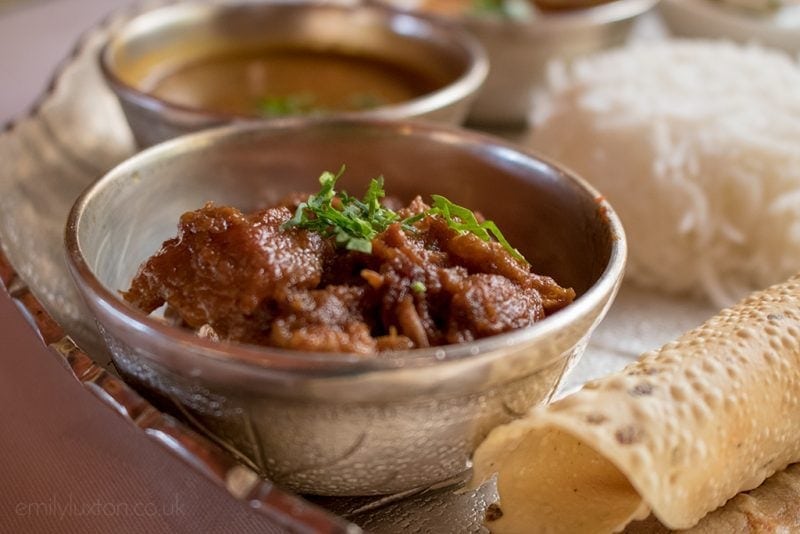
India has extraordinary food, and food can become one of the strongest joys of the trip. But this is not the destination where blind culinary bravery is always wise on day one. A better strategy is to start slightly conservatively, especially if you are newly arrived. Choose places that look clean, seem busy for good reasons, and have visible turnover. Tourist-friendly restaurants are not “less real” if they help you stay healthy enough to enjoy the trip.
Street food is not automatically a bad idea, but it is better approached with judgment than romance. Freshness, heat, local recommendations, and visible handling standards matter. If something feels questionable, you do not win any medal for eating it anyway.
Helpful hygiene habits
- Carry tissues or toilet paper
- Keep hand sanitizer easy to reach, not buried in your bag
- Wash hands properly whenever you can, not just when it is convenient
- Keep a few stomach-support basics with you every day
- Do not wait until you feel terrible before resting and hydrating
Hygiene in travel is not glamorous, but it is one of the biggest quality-of-trip issues in India. A traveler who stays healthy experiences India very differently from one who spends three days recovering in bed.
Money, SIM Cards, Apps, and Daily Essentials
Daily comfort in India improves dramatically when your practical setup is strong. That means working internet, easy access to money, and a few simple systems that reduce friction when you are tired.
Get connected early
A local SIM or reliable travel data setup can make a huge difference. Maps, ride apps, hotel communication, ticket checks, and emergency contact all become easier when you are not constantly looking for Wi-Fi. For solo travel, connection is not just convenience. It is confidence.
Carry money in layers
Do not rely on one card, one pocket, or one solution. Keep your money setup flexible. A good approach is to have your main card, a backup card, some cash for smaller transactions, and a separation system so one mistake does not become a full-day crisis.
Things worth saving before you leave your room
- Hotel address
- Offline map pin
- Transport booking screenshots
- Emergency contacts
- A short note with your next destination details
These tiny habits matter more than travelers think. They reduce panic when battery drops, signal disappears, or a driver does not understand your pronunciation the first time.
Handling Attention, Boundaries, and Social Situations
One of the most emotionally tiring parts of solo female travel in India can be attention. Sometimes it is completely harmless curiosity. Sometimes people will ask personal questions very quickly. Sometimes strangers will want selfies. Sometimes someone will talk to you for too long. Sometimes the attention is less friendly and more intrusive.
The key skill here is not becoming “nicer.” It is becoming clearer. You need a short, firm, low-drama way of signaling no. You do not owe every stranger a full conversation. You do not need to explain where you are staying, whether you are married, what your plans are, or why you do not want to meet later.
Useful boundary habits
- Keep answers short when you do not want to continue a conversation
- Do not share your exact hotel or live location casually
- Leave early if a situation feels increasingly uncomfortable
- Avoid trying to “manage” someone else’s disappointment at the expense of your own comfort
- Use shops, cafés, and staffed spaces as reset points if needed
It also helps to remember that India is not a single personality. Some days people will feel incredibly kind and protective. Other days you may feel visibly watched. Both can be true. Neither one tells the whole story. Your job is not to interpret the whole country every day. Your job is to respond well to the moment in front of you.
About selfies
Many travelers are surprised by how often people ask for photos. Some women are comfortable with the occasional polite selfie. Others prefer to say no almost every time. Either approach is fine. What matters is whether the interaction feels respectful and whether you still feel in control of the situation. If a group forms, if the mood changes, or if it feels like “just one photo” is becoming something else, walk away.
Social media caution
Posting in real time can make you easier to locate than you realize. A delayed posting habit is often much smarter, especially for solo travelers. Sharing beautiful moments later is usually better than broadcasting exactly where you are while you are still there.
Mistakes to Avoid
1. Trying to “win” India on your first trip
India is not a destination you complete. The more you try to force too much into one trip, the less you actually absorb. Leave room for repetition, rest, digestion, and genuine presence.
2. Booking every transfer too tightly
Tight connections and ambitious same-day plans create stress quickly. Give yourself buffer. Buffer is not wasted time. Buffer is the difference between resilient planning and brittle planning.
3. Choosing accommodation only by price
A low nightly rate can cost you in poor sleep, awkward location, hygiene issues, and emotional stress. Cheap is not automatically efficient.
4. Ignoring your body’s signals
If you are overheating, overstimulated, sick, or running on too little sleep, your judgment changes. Travelers often frame this as weakness. It is not weakness. It is maintenance.
5. Feeling guilty for using easier options
A direct ride, a slightly more comfortable hotel, a guided transfer, or a domestic flight is not “less authentic” if it makes your trip safer and more enjoyable. Smart does not mean soft. It means sustainable.
6. Sharing too much information with new people
You can be warm without being fully open. Keep some privacy. It protects you and gives you room to assess people over time.
7. Treating every uncomfortable moment as proof you made a bad choice
Not every hard moment means the whole trip is wrong. Sometimes it just means the day is hard. India especially requires emotional patience. One awkward ride or one exhausting afternoon does not define the journey.
Suggested 7-Day, 10-Day, and 14-Day Itineraries
These sample itineraries are not meant to be copied blindly. They are examples of pacing. The point is to show how a route can feel balanced rather than hyper-packed.
7-Day Beginner Pace
Day 1: Arrive, settle in, light walk only.
Day 2–3: Explore your first main base slowly.
Day 4: Transfer day with little else planned.
Day 5–6: Second base, more culture and one relaxed evening.
Day 7: Light final day, departure, no major squeezing-in.
This works well for travelers who want a taste of India without turning the trip into a race. Two bases are enough for one week. Three can work, but only if distances are sensible and your energy is high.
10-Day Balanced First Trip
Days 1–3: Starter city or heritage base with manageable sightseeing.
Days 4–6: A second destination with stronger atmosphere and more cultural depth.
Days 7–8: A slower town, mountains, or a place where you can recover.
Days 9–10: Return base or departure city, with room for practical flexibility.
This is often the sweet spot for first-timers. Ten days allows enough time to settle into the country without making the itinerary feel endless. It also gives you room to adapt if a place surprises you in a good way.
14-Day Deeper Route
Days 1–3: Arrival and acclimatization in a practical first base.
Days 4–6: Major cultural destination with time for both highlights and slower wandering.
Days 7–9: Another distinct region for contrast.
Days 10–11: Rest-oriented base, nature, or a slower heritage town.
Days 12–14: Return to departure zone with one final meaningful stop, not a rushed checklist.
Two weeks is enough to have a fuller relationship with the trip, but it still rewards restraint. Even at 14 days, you do not need to chase every famous stop.
How to choose between a city-heavy route and a softer route
If you love architecture, history, markets, and fast-moving urban energy, a city-heavy route can be deeply rewarding. But if your nervous system tires easily from crowds and noise, a softer route will likely help you enjoy the country more. India is not only its biggest cities. Sometimes your best trip comes from deliberately choosing less intensity, not more.
Experience-Based Advice That Makes a Huge Difference
Build your days around energy, not just attractions
A lot of travel advice focuses on what to see. In India, how you feel while seeing it matters just as much. If mornings are your calmest time, use them for movement and decision-making. Keep afternoons lighter in hot or hectic places. Give yourself a real dinner plan, not a vague “I’ll figure it out later” if later means tired and overstimulated.
Respect your own social battery
Some solo travelers crave connection every day. Others need privacy to process. India can be socially intense even when nobody is doing anything wrong. Give yourself permission to be “off duty” sometimes. A quiet breakfast, one evening in, or a slower morning is not wasted travel time. It is how you stay receptive.
A good day in India is not always a smooth day
This is one of the biggest emotional lessons. Some of your best travel memories may come from imperfect days: the place that took longer to reach than expected, the meal that happened because you paused instead of pushing on, the conversation that opened because you had enough time to listen, the temple visit you appreciated more because you were not trying to fit three more things into the same hour.
Have a reset ritual
In intense destinations, little rituals help. Maybe yours is showering and changing clothes before dinner. Maybe it is journaling. Maybe it is tea and reviewing the next day’s plan. Maybe it is fifteen quiet minutes in your room with your phone off. These rituals sound small, but they restore control.
Keep your standards flexible but not absent
Travel in India asks for adaptability. But adaptability does not mean accepting everything. If a situation feels unsafe, leave. If a room feels wrong, pay more and move. If a driver is making you uncomfortable, end the ride. If you are too sick to continue the itinerary, rest. The strongest travelers are not the ones who tolerate the most. They are the ones who adjust fastest when something no longer works.
Frequently Asked Questions
Should solo female travellers avoid India completely?
No. But India is best approached with serious planning and realistic expectations. It is not the most passive destination, yet it can be incredibly rewarding if you travel thoughtfully.
Is India okay for a first solo trip?
It depends on your personality and how well you handle unpredictability. For some women, it becomes an empowering first big solo challenge. For others, it is better after they have already done one or two easier solo trips elsewhere. There is no shame in either approach.
Is modest clothing really necessary?
In many places, it makes things easier. It can reduce unwanted attention, improve comfort, and make temple and cultural visits simpler. Think of it as practical adaptation, not self-erasure.
Should I avoid trains?
Not necessarily. Trains can be a wonderful part of the trip. Day trains are often the easiest place to start. Overnight trains can be fine too, but they may feel more demanding if you are very new to the country.
What is the biggest reason trips go badly?
Usually not one dramatic event. More often it is a chain of smaller problems: too much movement, poor sleep, weak accommodation choices, heat, bad timing, hunger, and overstimulation. That is why planning and pacing matter so much.
Can India still be enjoyable if I am not an ultra-confident backpacker?
Absolutely. You do not need to be fearless. You just need to be thoughtful. Many great India trips are built not on bravado, but on good preparation and strong daily habits.
Final Thoughts
Solo female travel in India is not about proving you are brave enough for chaos. It is about learning how to travel with awareness, flexibility, and self-respect in a country that offers enormous depth. India may not always give you an easy day, but it can give you a meaningful one. And sometimes that is even better.
If you plan well, dress practically, pace your route wisely, protect your energy, and trust your instincts early, India can move from “intimidating” to “deeply rewarding.” You do not need to conquer it. You just need to travel through it in a way that allows the trip to unfold without constantly fighting it.
The best version of this journey is not the version where everything goes perfectly. It is the version where you stay steady enough to appreciate the beauty, handle the messy bits, and come home with the kind of memories that still feel alive long after the trip ends.
- India can be rewarding for solo female travellers, but it rewards planning and awareness.
- Dress modestly and practically to make daily life easier.
- Keep your route smaller and slower than your first instinct.
- Choose accommodation for safety and recovery, not just price.
- Take food and water hygiene seriously from day one.
- Use clear boundaries, delayed location sharing, and a strong daily system.
- Do not confuse a hard day with a bad trip.


